
Pressure Ulcers: Prevention & Care at Home
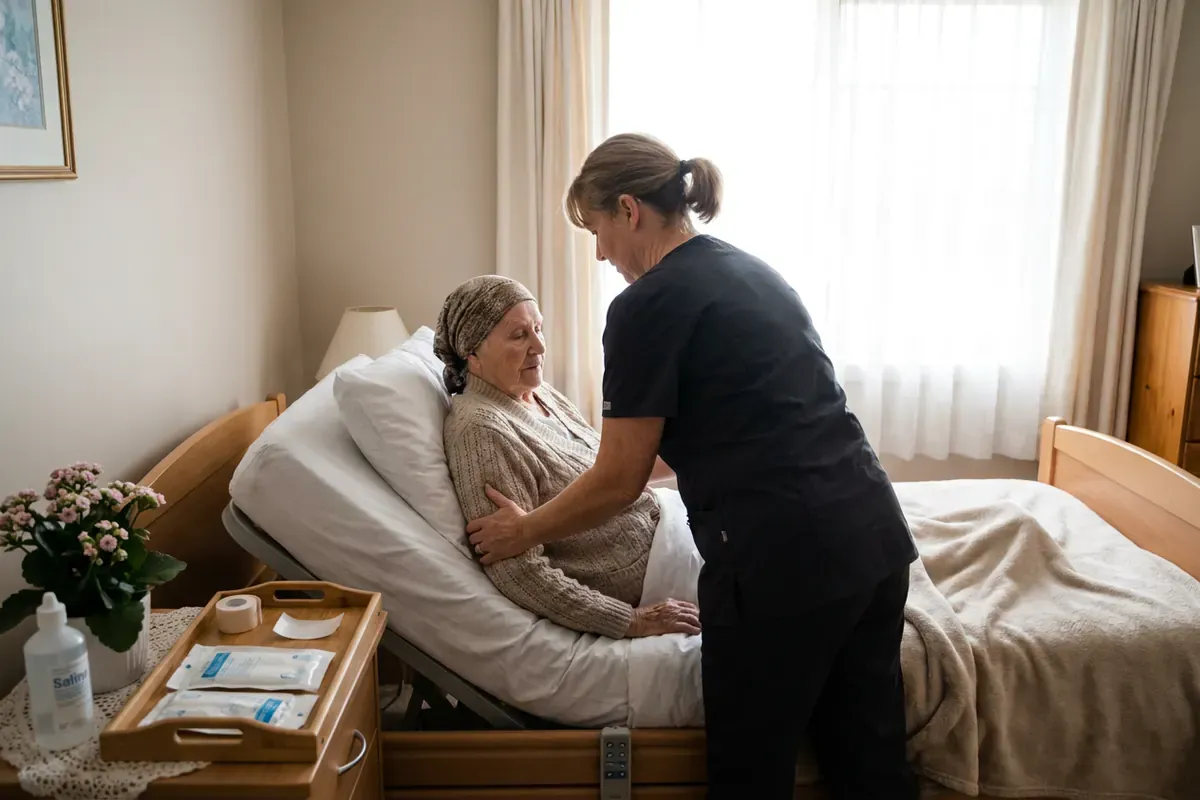
Pressure Ulcers: Prevention & Care at Home
When a loved one spends long periods in bed or in a chair, one of the most common and most painful risks is pressure ulcers - also known as bedsores. The good news is that, in the great majority of cases, they can be prevented. With the right daily care and appropriate nursing support, the skin can stay healthy even in people with severely limited mobility.
What They Are and How They Form
Pressure ulcers are injuries to the skin and the tissues beneath it, caused by sustained pressure on one part of the body. When the body’s weight presses the skin against a hard surface - usually over a bone - blood flow to the area is reduced. Without enough circulation, the tissues are starved of oxygen and begin to break down, sometimes within only a few hours.
Two further factors contribute: friction (when the skin rubs against the sheets) and shear (when the skin is pulled in one direction while the tissue beneath moves in another, for example when a patient slides down the bed).
The most vulnerable points are where bone lies close to the surface of the skin:
- The sacrum and tailbone (low on the back)
- The heels and ankles
- The hips and buttocks
- The shoulder blades, elbows, and the back of the head
Who Is Most at Risk
The risk rises when several factors occur together. At home, particular attention is needed for:
- People who are bedridden or have severely limited mobility
- People who cannot reposition themselves (after a stroke, with advanced dementia, or with paralysis)
- People with poor nutrition or dehydration, whose skin is thin and fragile
- People with incontinence, which keeps the area moist
- People with diabetes or circulation problems
- People with reduced sensation, who do not feel the discomfort of pressure
Prevention at Home
Prevention rests on a few simple, consistent daily habits.
Regular repositioning. Changing position is the single most important measure. As a general principle, a bedridden patient needs repositioning roughly every two hours, and someone sitting needs it more often. Use pillows to support the body and relieve vulnerable points - never drag the patient, but lift them to avoid friction.
Daily skin inspection. Inspect every pressure point each day. A warning sign is an area of redness that does not fade when you press it gently with a finger. On darker skin, the change may appear as a darker or warmer patch. Report any new mark straight away.
Skin care. Keep the skin clean and dry, changing promptly in cases of incontinence. Use gentle cleansing and a moisturiser on healthy skin. Avoid rubbing reddened areas vigorously.
Pressure-relieving surfaces. Specialist mattresses and cushions (such as air or foam systems) distribute weight and reduce the risk. Your nurse can advise on the right choice.
Hydration and nutrition. Well-nourished skin is more resilient. Adequate fluid intake and a balanced diet, with attention to protein, support tissue integrity and healing. Coordinate with the treating physician about any dietary restrictions.
How the Nurse Assesses and Treats
Once a pressure ulcer has already appeared, caring for it is nursing work. A nurse from our team will assess the wound and determine its stage - from the initial persistent redness through to deeper ulcers that involve the tissues beneath the skin. The staging guides the care plan.
The nurse will then:
- Clean the wound with the appropriate technique and materials
- Select the right dressing according to the stage and condition of the wound
- Monitor the course of healing and watch for signs of possible infection
- Document progress and adjust the plan
- Teach the family safe repositioning and care techniques
Care is always provided in coordination with the treating physician, who guides the overall therapeutic approach. We do not administer medications or treatments without medical instruction.
When to Call
Contact the nurse or physician without delay if you notice:
- Redness that does not fade, a blister, or an open wound over a pressure point
- Increasing pain, swelling, or warmth around an area
- Discharge, bad odour, or pus from a wound
- Fever or a general worsening of the person’s condition
The sooner a pressure ulcer is addressed, the easier and safer it is to heal.
Request a Nurse Visit
Caring for a bedridden loved one at home does not have to weigh on you alone. Our specialised nurses in Ioannina and across Epirus can assess the risk, design a prevention plan, and manage any wounds safely. Request a nurse visit today and we will be beside you at every step.