
Home Wound Care: A Practical Guide
Home Wound Care: A Practical Guide
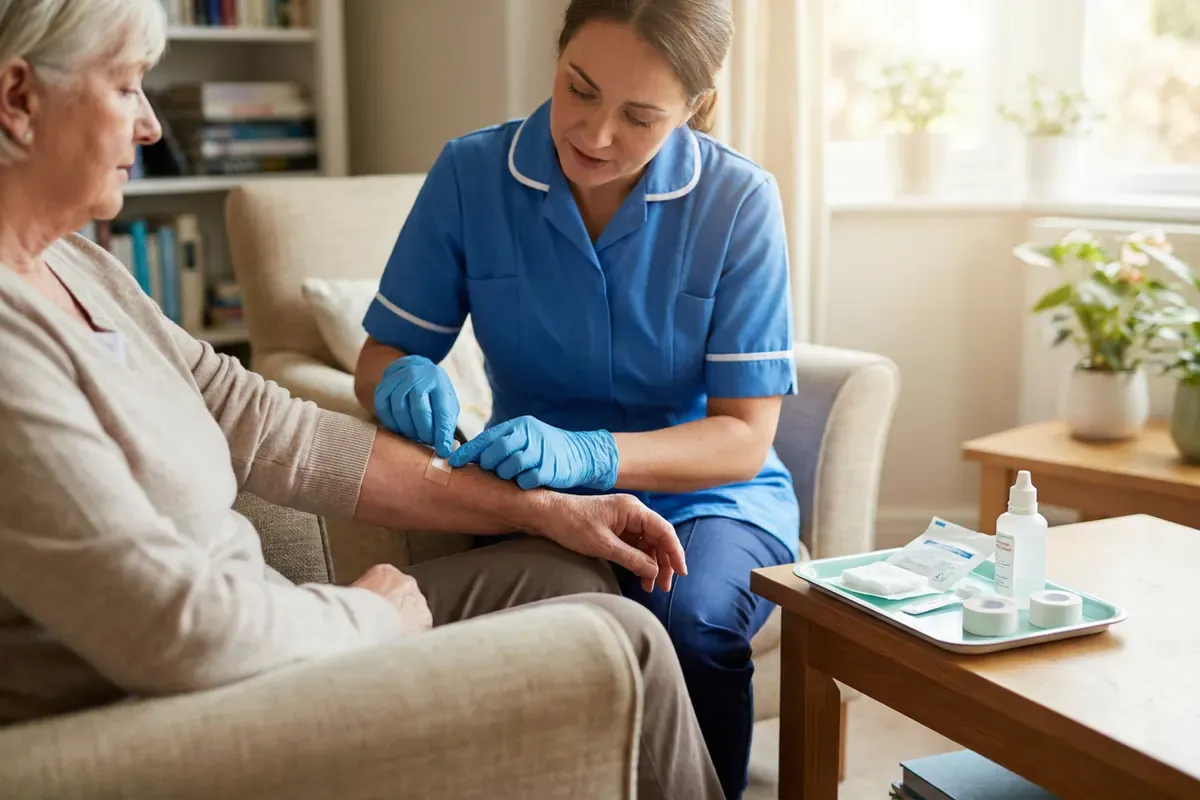
A wound that is not healing as it should can cause anxiety for the whole family. The good news is that many wounds can be managed safely at home, as long as the care is provided by a specialized nurse and in coordination with the treating physician. In this guide we explain which wounds can be cared for at home, why professional nursing care matters and exactly what each visit involves.
Which Wounds Can Be Cared for at Home
Home nursing covers a wide range of wounds. In every case, the care plan is set in cooperation with the doctor following the patient.
- Surgical wounds: incision care after an operation, dressing changes and monitoring of how healing is progressing.
- Chronic ulcers: pressure injuries (bedsores), venous or arterial ulcers that need regular, methodical care.
- Diabetic foot: ulcers in people with diabetes, which require special attention and close cooperation with the doctor.
- Minor traumatic wounds: abrasions, shallow cuts or grazes that need a clean, properly applied dressing.
Some wounds (deep, extensive or with heavy bleeding) first need assessment at a healthcare facility. The nurse helps you understand what is suitable for care at home and when a referral is needed.
Why Professional Nursing Care Matters
Caring for a wound is not simply “changing the gauze.” It is a medically grounded process that, when done correctly, reduces the risk of complications and supports healing.
- Sterile technique: the nurse works in a clean, controlled way so that no germs are introduced into the wound.
- Infection prevention: correct technique and regular reassessment catch the first signs of a problem early.
- Appropriate dressings: there are many types of modern dressings; the choice depends on the type and condition of the wound.
- Continuity and documentation: each visit is recorded, so progress is tracked consistently.
What the Nurse Does, Step by Step
Every visit follows a careful, organized flow. The goal is safety, the patient’s comfort and ongoing communication with the doctor.
- Assessment: the nurse examines the wound (size, appearance, drainage, surrounding skin) and asks about pain and general condition.
- Cleaning: the wound is cleaned gently and appropriately, using sterile technique.
- Dressing selection: the type of dressing chosen matches the healing stage and the condition of the wound.
- Monitoring healing: progress is recorded from visit to visit and the plan is adjusted if needed.
- Physician coordination: the nurse informs the treating doctor of any significant change and follows their instructions.
The nurse also guides you and the family: what to watch for between visits, how to protect the wound and how to support healing through rest, hydration and good nutrition, always in line with the doctor’s instructions.
Signs of Infection to Watch For
Between visits, it helps to know the signs that may point to an infection. If you notice any of these, contact your nurse or doctor.
- Increasing redness, warmth or swelling around the wound
- Pain that intensifies instead of easing
- Drainage with an unpleasant odor or a change in color (for example greenish or yellowish pus)
- Fever, chills or a general feeling of being unwell
- A wound that shows no signs of improvement within the expected timeframe
These signs do not necessarily mean something serious, but they are always worth having assessed by a professional.
When to Seek Urgent Help
In some situations, immediate medical care is needed. Seek urgent help if there is:
- Heavy or uncontrolled bleeding
- Rapidly spreading redness or severe swelling
- High fever with chills
- Severe, sudden pain or signs that worry you seriously
When in doubt, it is always better to ask. No question about a loved one’s health is ever unnecessary.
We Are Here for You
Our team at Komvos Ygeias is made up of specialized nurses who provide wound care at home, throughout Epirus and Ioannina, always in coordination with your treating physician. If you need support with a wound, do not hesitate to contact us. Request a Nurse Visit and together we will design a safe, personalized care plan.